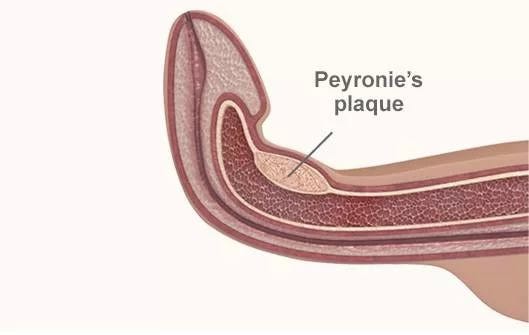
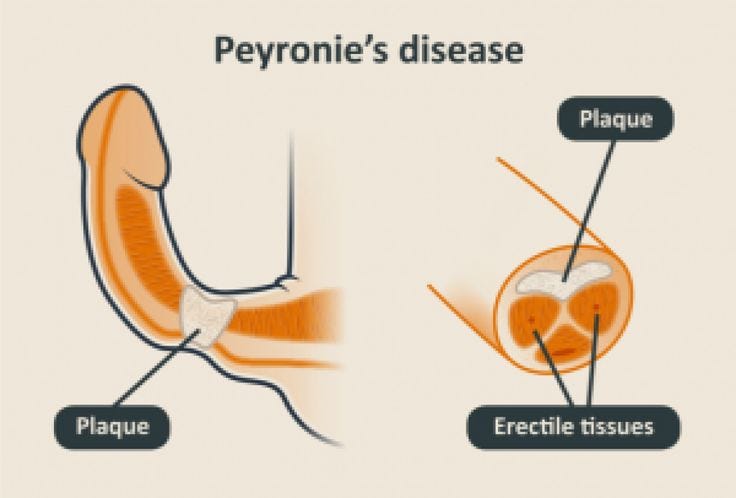
Traction therapy following surgery for Peyronie’s disease may increase actual and perceived penile length for some men, according to new research published in the Journal of Sexual Medicine.
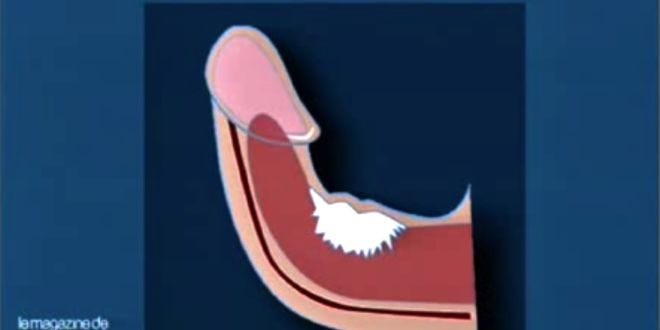
Peyronie’s disease, a wound-healing disorder, causes areas of hardened scar tissue called plaques to form on the penis. These plaques lead to decreased flexibility, resulting in a noticeable penile curvature during erection. Some men with Peyronie’s disease experience pain and are unable to have intercourse.
Surgery is one treatment option. Two types of surgeries pertain to this study. The first is called tunica albuginea plication (TAP) and involves stitching the area on the opposite side of the plaques to straighten the curvature. The other procedure is partial plaque excision and grafting (PEG), in which a surgeon makes an incision in the plaque and fills it with graft material.
One common complication of surgery for Peyronie’s disease is penile shortening, which can be a serious concern.
In this study, American researchers from Rush University Medical Center in Chicago worked with four groups of men. (A total of 134 men participated.) Two groups had TAP surgery, the other two had PEG procedures. For each type of surgery, one group had traction therapy and the other did not.
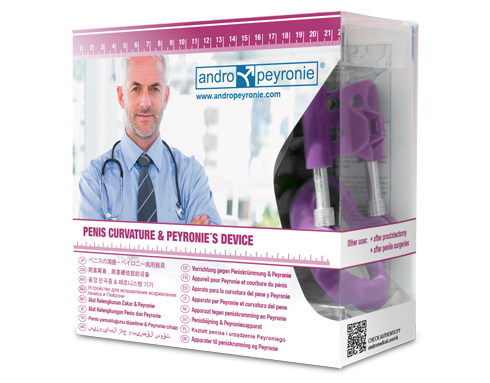
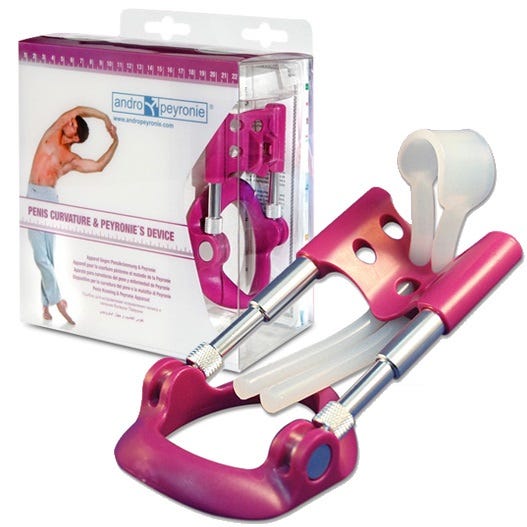
Traction therapy ( ANDROPEYRONIE ) involved wearing a traction device on the penis for a recommended 2–6 hours each day starting 3–4 weeks after surgery. From that point, patients were advised to use the device for three months. The goal of traction therapy (ANDROPEYRONIE) was to keep the penis straight as it healed and prevent length loss.
Stretched penile length measurements were taken before and after treatment. In addition, all men were mailed a questionnaire that asked about their perceptions of penile length change and their pre- and post-surgery satisfaction.
For the men who underwent TAP :
• The mean length change was 0.85 cm.
• 68% perceived erect length gain.
• 0% perceived erect length loss.
• 32% perceived no change in erect length.
For men who underwent TAP without traction therapy:
For men who underwent PEG without traction therapy:
• The mean length change was 0.24 cm.
• 14% perceived erect length gain.
• 57% perceived erect length loss.
• 29% perceived no change in erect length.
Overall, 69% of all participants were satisfied with their surgical outcome.
There were no complications or changes in penile sensation associated with traction therapy.
The researchers concluded that traction therapy can preserve some measured and perceived penile length after surgery for Peyronie’s disease. However, because of the psychological implications of penile length and outcome satisfaction, it is important for men to have realistic expectations before they have surgery.
“A Retrospective Comparative Study of Traction Therapy vs. No Traction Following Tunica Albuginea Plication or Partial Excision and Grafting for Peyronie’s Disease: Measured Lengths and Patient Perceptions”
(Full-text. First published online: August 17, 2012)
La enfermedad de Peyronie es el crecimiento de tejido cicatrizal fibroso dentro del pene que generando erecciones dolorosas y curva el pene. Loa penes varían en tamaño y forma, y que posee una erección curva no es necesariamente un motivo de atención o preocupación. Pero la enfermedad de Peyronie desencadena una curvatura o dolor significativo en algunos hombres.
Esto puede obstaculizar de tener relaciones sexuales o puede hacer que sea difícil para desarrollar o mantener una erección (disfuncion erectil). Para muchos hombres, La enfermedad de Peyronie y también genera ansiedad y el estrés.
En la enfermedad de Peyronie el tratamiento puede ser necesario si la curvatura es lo suficientemente grave que impide una relación sexual satisfactoria.
Una placa o fibrosis . El tejido de la cicatriz (placas) vinculada con la enfermedad de Peyronie se puede sentir debajo de la piel del pene grumos como planas o una banda de tejido sólido. Una curva visible del pene. Su pene puede ser doblado hacia arriba, hacia abajo o doblada a un lado. En ciertas ocasiones, el pene erecto podría tener la contracción, indentaciones o una forma de reloj de arena, con un apretado, banda estrecha a lo largo del eje. Dificultad en la erección. La enfermedad de Peyronie podría causar dificultades para conseguir o mantener una erección (disfuncion erectil). Comprimir del pene. Su pene puede crecer más corto, como consecuencia de la enfermedad de Peyronie. Dolor. Es posible que tenga dolor o molestia en el pene, con o sin una erección. La curvatura vinculada con la enfermedad de Peyronie podría empeorar progresivamente.
Dolor a lo largo erecciones normalmente aumenta en el interior de uno a dos años, pero el tejido de la cicatriz y la curva a menudo continúan.
andropeyronie penis extender peyronie´s disease
¿Cuándo se debe acudir al médico? Consulte a su médico si el dolor o la curvatura de su pene que inhibe de tener relaciones sexuales o desencadena su ansiedad.
La causa de la enfermedad de Peyronie . Es considerado como la enfermedad de Peyronie se forma típicamente de una lesión repetida en el pene. Por ejemplo, el pene puede ser herido durante una actividad deportiva, sexo o como consecuencia de un accidente.
A través del proceso de curación, el tejido cicatricial se desarrolla de una manera desordenada, lo que podría dar lugar a continuación, un nódulo que se puede sentir o la progresión de la forma de la curvatura.
Cada lado del pene comprende un tubo similar a una esponja (cuerpo cavernoso) que comprende muchos vasos sanguíneos diminutos. Ambos de los cuerpos cavernosos está encerrado en una funda de tejido elástico se hace referencia como la túnica albugínea , que se alargar durante una erección.
Cuando se produce la erección , el flujo de sangre congestiona las hoquedades o sacos senosos haciendo crecer al pene y se endurecen en una erección.
En la enfermedad de Peyronie, cuando el pene erecto crece, la zona con el tejido cicatrizal el pene se dobla o se vuelve desfigurado y posiblemente doloroso.
En algunos hombres, La enfermedad de Peyronie ocurre en forma lenta y no parece estar relacionada con una lesión. Los investigadores están investigando si la enfermedad de Peyronie podría estar relacionada con un rasgo heredado o ciertas condiciones de salud.
Riesgos. Tener una pequeña lesión en el pene no siempre genera una enfermedad de Peyronie. sin embargo, varios factores pueden contribuir a una mala cicatrización de las heridas y la acumulación de tejido cicatricial (un tipo de queloide por exceso de colágeno) que podría tener un papel en la enfermedad de Peyronie. Éstas incluyen:
Herencia. Si su padre o hermano tiene la enfermedad de Peyronie, usted tiene un mayor riesgo. Trastornos del tejido conectivo. Los hombres que tienen un trastorno del tejido parecen tener riesgo surgido de desarrollar la enfermedad de Peyronie. Por ejemplo, algunos hombres que tienen la enfermedad de Peyronie también tienen un engrosamiento similar a un cordón a través de la palma de la mano que produce los dedos para tirar hacia adentro (contractura de Dupuytren). Edad. El predominio de la enfermedad de Peyronie progresa con la edad, especialmente en hombres mayores 55. Otros factores — incluyendo ciertas condiciones de salud, fumar y algunos tipos de cirugía de próstata — podrían estar asociados con la enfermedad de Peyronie.
complicaciones Las complicaciones de la enfermedad de Peyronie pueden incluir:
Dificultad para lograr o mantener una erección (disfuncion erectil) El no tener relaciones sexuales, La ansiedad o el estrés sobre las habilidades sexuales o la apariencia de su pene. Estrés en su vínculo con su pareja sexual Complejidad engendrar un hijo, porque las relaciones sexuales es difícil o imposible.
Diagnóstico Un examen físico regular es eficaz para reconocer la aparición de tejido cicatricial en el pene y el diagnóstico de la enfermedad de Peyronie. , otras condiciones causan síntomas similares y necesitan ser descartado.
Evaluar y poner a prueba para diagnosticar la enfermedad de Peyronie y entender con precisión lo que está desencadenando sus síntomas podrían incluir lo siguiente:
Examen físico. Su médico va a sentir (palpar) su pene cuando no está erecto, para distinguir el lugar y el significado de tejido cicatricial. Él o ella también puede marcar la longitud de su pene. Si la condición continúa deteriorándose, esta determinación inicial ayuda a decidir si el pene se ha reducido en longitud.
Su médico también podría solicitar que traiga fotos de su pene erecto tomadas en el hogar. Esto se puede determinar el grado de curvatura, colocación de tejido cicatricial u otros detalles que podrían ayudar a distinguir el mejor enfoque de tratamiento.
otras pruebas. Su médico podría ordenar una ecografía u otras pruebas para comprobar su pene cuando está erecto. Antes de obtener imágenes de su pene, es probable que se someten a una inyección de inmediato en el pene que hace que se vuelva erecto.
La ecografía es la prueba más habitualmente utilizado para las deformidades del pene. Las pruebas de ultrasonido utilizan ondas sonoras para crear imágenes de los tejidos blandos. Estas pruebas pueden determinar la presencia de tejido de cicatriz, el flujo de sangre al pene y cualesquiera otras irregularidades.
TRATAMIENTO. Su médico podría recomendar una estrategia de esperar y ver (espera vigilante) Si el enfoque:
La curvatura de su pene no es grave y ya no está empeorando Usted todavía puede tener erecciones y el sexo sin o con dolor leve Usted tiene una buena función eréctil Si sus síntomas son críticas o son graves con el tiempo, su médico puede prescribir:
PTT tratamiento con un aparato de tracción andropeyronie muy eficaz especialmente en fases agudas con una corrección en torno del 60% de la curvatura o cirugía en caso de curvatura congénita severa, en estos casos tras la intervención se colocara otro aparato mecánico (androsurgery)para evitar el acortamiento del pene por una retracción cicatricial.
Afrontamiento y apoyo La enfermedad de Peyronie puede ser una causa de ansiedad significativa y crear estrés para usted y su pareja sexual. Para hacer frente a la enfermedad de Peyronie:
Hable con su pareja acerca de cómo los dos se puede mantener la intimidad sexual y física. Dile a tu pareja lo que la enfermedad de Peyronie es y cómo afecta a su capacidad para tener sexo. Informe a su pareja cómo se siente acerca de la apariencia de su pene y su capacidad para tener relaciones sexuales.. Buscar apoyo terapeútico con un psicólogo o sexólogo .
Preparación para su cita Si usted tiene síntomas de la enfermedad de Peyronie, que está inclinado a empezar por ver a su médico de familia o médico general. Usted puede ser transferido a un urólogo.
Preparación para su cita le ayudará a hacer el mejor uso de su tiempo. Haga una lista de la siguiente información que ayuda al médico a entender lo que está pasando.
Los síntomas que estamos encontrando, incluyendo cualquier que podría parecer irrelevante para la enfermedad de Peyronie La información clave de la salud, incluyendo cualquier importancia mayor o cambios recientes de la vida. Los medicamentos que usted está utilizando, incluyendo cualquier tipo de vitaminas o suplementos Historia de la lesión en el pene Antecedentes familiares de la enfermedad de Peyronie,
Preguntas para hacer a sus médicos Lista de preguntas para su médico de mayor a menor importancia en caso el tiempo se agota. Es posible que desee hacer algunas de las siguientes preguntas:
¿Qué tratamiento recomienda?
Se puede saber si los síntomas son propensos a empeorar o mejorar? ¿Qué pruebas voy a necesitar? Los sitios web que me recomiendan? Además de las preguntas que has puesto juntos para preguntar a su médico, no hacer una pausa para hacer preguntas durante su cita.
¿Qué esperar de su médico. Su médico puede hacerle algunas preguntas. Para estar preparados para responder a ellos puede reservar tiempo para repasar los puntos que desea discutir más a fondo. Your doctor might ask:
¿Sus síntomas frenar su capacidad para tener sexo? la curvatura de su pene se ha convertido con el tiempo? ¿Cuándo empezó a discernir una curva en el pene o el tejido de la cicatriz debajo de la piel de su pene? ¿Tiene dolor durante la erección, y de ser así, ¿ha empeorado o mejorado con el tiempo? ¿Recuerda que tiene una lesión en su pene? Su médico también puede pedirle que realice una encuesta, tales como el Índice Internacional de Función Eréctil, para ayudar a clasificar cómo la condición deteriora su capacidad para tener sexo.
One noninvasive technique to lengthen penises — penile traction devices — shows promise, according to a new review of research. But researchers say most men who seek longer penises don’t really know the long and short of their situation.
“Penile size is a matter of great interest among men who are affected by ‘short penis syndrome’ or just believe themselves to have a small penis, even though the dimensions of the organ fall within the normal range,” write urologists Marco Oderda and Paolo Gontero in the current issue of the British Journal of Urology International.
Oderda and Gontero, both from the University of Turin, Molinette Hospital, in Italy, concluded that for those men who have a normal-size penis yet persist in requesting treatment, penile extenders may be the way to go. Cognitive behavioral therapy may also be useful for building confidence in these men with psychological issues causing the mismatch between reality and what’s in their head, they write. [Related: Penis Myths Debunked]
What works
Several nonsurgical methods for lengthening the penis, such as penile traction gadgets, vacuum devices, penoscrotal rings and even “physical exercises,” have been popularized in the media.
To get a real picture of the science on such devices, the researchers did an extensive search for studies on the topic of “short penis” and associated treatments, ending up with just 10 studies that met their criteria.
Based on one study, vacuum devices got a failing mark, showing no significant penile elongation after six months of therapy, though the researchers of that study noted it provided psychological satisfaction for some men. Penile-lengthening exercises also had no science backing up their effectiveness.
The few well-conducted studies on penile extenders, which use mechanical traction to progressively elongate the penis, showed these devices can produce an “effective and durable lengthening of the penis,” the researchers write.
For instance, a small study published in 2002 in the International Journal of Impotence Research showed a penis stretcher called Andropenis could add 0.7 inches (1.8 centimeters) on average to the sex organ after four months of use for at least six hours a day. That extender device showed promise in another study with six months of use for at least four hours a day. And the Golden Erect extender was shown to increase penis length in participants of a study published in 2010 in the Journal of Sexual Medicine.
Who’s seeking treatment?
Many men who are concerned with their penis’s small stature suffer from “dysmorphophobia,” a condition where people see some imaginary flaw in physical appearance as real — in this case a false perception of penis inadequacy, the researchers say.
And apparently this male body-image problem is on the rise. According to LiveScience’s Bad Medicine columnist, Christopher Wanjek, “Many men long to have something longer, even though few have a penis that is too small to copulate or pleasure their partner. This anxiety over size is called penile dysmorphophobia, and it is on the rise worldwide as men turn to pornography and compare notes.”
Urologist Nicola Mondaini of the University of Turin in Italy agreed, telling LiveScience “this trend is increasing.”
That said, penile shortening is a real medical phenomenon and can be caused by so-called a radical prostatectomy for prostate cancer, Peyronie’s disease (an acquired penile deformity of the erect penis) and as a result of embryonic or developmental defects. In addition, a so-called “hidden penis,” caused by obesity, aging with an overlying fold of abdominal fat and skin, and a shortage of penile skin from circumcision, for instance, can also “shorten” the penis.
As for how prevalent penile dysmorphophobia is, in one study published in the International Journal of Impotence Research in 2002, 67 men with a median age of 27 came to the university hospital in Italy within a two-year period complaining of having a short penis. None of the patients fell into the category of a short penis; in other words, all were of normal size.
Sixty percent of the men said their feeling of inadequacy down there started in childhood when they noticed their friends were more endowed. Fifty-seven of these patients thought a normal penis length was somewhere between 3.9 and 6.7 inches. (10 and 17 cm). The others didn’t know what “normal length” was. These results suggest penis lengthening is not the answer, the researchers pointed out in that study.
One of the largest penis-size studies involved more than 3,000 men and found similar results — that most men seeking size enhancement were within the normal size range and overestimated the average penis size. That study was published in the International Journal of Impotence Research in 2002.
So what’s normal you ask? Anything greater than 1.6 inches (4 cm) flaccid and greater than 3 inches (7.5 cm) in a stretched or erect state. As for the average penis size, numbers vary depending on the study, but Mondaini says: 3.5 inches (9 cm) flaccid, 4.5 inches (12.5 cm) stretched and 5.9 inches (15 cm) erect.